
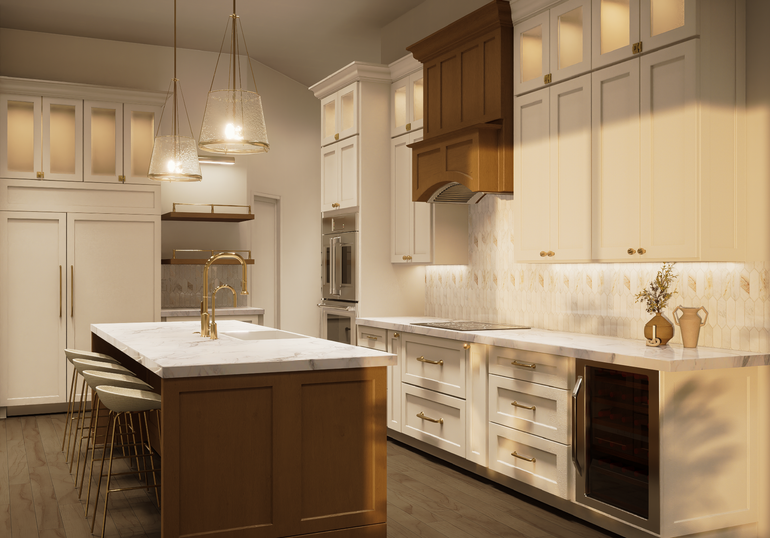
Kitchen lighting plays a big role in how your home looks, feels, and functions every day. In Florida homes, where natural light, warm weather, open layouts, and indoor-outdoor living are common, the right lighting plan can make your kitchen feel bright without becoming harsh or overheated. By combining style, comfort, and practical task lighting, you can create a kitchen that works well for cooking, entertaining, relaxing, and everyday family life.
Layer Your Kitchen Lighting
A strong kitchen lighting plan usually includes more than one type of light. Ambient lighting provides overall brightness, task lighting helps with cooking and prep work, and accent lighting adds warmth or highlights design features. Layering these types of lighting gives you more control throughout the day, especially in Florida homes where sunlight changes quickly from bright afternoons to cloudy storms and darker evenings.
Use Recessed Lighting for Clean Brightness
Recessed kitchen lighting works well in many Florida homes because it offers a clean, open look without taking up visual space. It is especially useful in kitchens with low ceilings, open floor plans, or modern designs where bulky fixtures may feel distracting. Proper spacing matters, so lights should be placed to brighten the room evenly without creating shadows over counters or work areas.
Add Pendant Lights Over the Island
Pendant lights can bring style and function to a kitchen island. They help define the island as a gathering space while adding focused light for meals, homework, food prep, or casual conversations. In Florida homes, glass, woven, rattan, metal, or coastal-inspired pendants can work especially well with bright interiors and relaxed design styles.
Install Under-Cabinet Lighting
Under-cabinet lighting is one of the most practical upgrades for any kitchen. It brightens countertops where you chop, mix, read recipes, and prepare meals, helping reduce shadows from upper cabinets. LED strip lights or puck lights are popular choices because they provide useful light while staying energy-efficient and discreet.
Choose LED Lighting for Energy Efficiency
Florida homes often need lighting that can handle regular use without adding extra heat or energy waste. LED lights are a smart choice for kitchen lighting because they use less energy, last longer, and stay cooler than many older lighting options. This makes them especially helpful in kitchens, where appliances, sunlight, and cooking can already make the room feel warm.
Make the Most of Natural Light
Many Florida kitchens benefit from large windows, sliding doors, skylights, or open views to the patio or backyard. Instead of fighting natural light, design your lighting plan around it by using window treatments that reduce glare while still keeping the space bright. Light-colored walls, reflective backsplashes, and well-placed fixtures can help the kitchen feel fresh and open from morning through evening.
Use Dimmers for Better Control
Dimmers are a simple feature that can make your kitchen lighting much more flexible. Bright light is useful for cooking and cleaning, while softer light works better for dinner, entertaining, or late-night snacks. In Florida homes with open kitchens connected to living or dining areas, dimmers help the kitchen blend more comfortably with the rest of the space.
Highlight Backsplashes and Design Details
Accent lighting can make your kitchen feel more polished by drawing attention to special design features. Kitchen lighting placed near a tile backsplash, open shelving, glass cabinets, range hood, or decorative wall can add depth and visual interest. This works well in Florida kitchens that use natural textures, coastal colors, stone, tile, or bright white finishes.
Consider Ceiling Fans With Lights Carefully
Ceiling fans are common in Florida homes, but they need to be used carefully in kitchens. A fan with a light can improve airflow in nearby breakfast areas or open kitchen spaces, but it should not interfere with cooking zones, cabinet doors, or pendant lights. If your kitchen gets warm, a low-profile fan in the right location may add comfort without disrupting the layout.
Choose Fixtures That Handle Humidity
Florida’s humidity can affect materials over time, especially in homes near the coast. Kitchen lighting fixtures should be made with finishes that resist corrosion, tarnishing, and moisture-related wear. Powder-coated metal, sealed glass, quality stainless finishes, and durable outdoor-inspired materials can be good choices for homes in humid or coastal areas.
Match Lighting to Your Kitchen Style
Your kitchen lighting should support the overall look of your home. A coastal kitchen may look great with woven pendants or soft white fixtures, while a modern kitchen may call for clean-lined metal or simple glass designs. Traditional, transitional, farmhouse, and contemporary Florida homes can all benefit from lighting that feels connected to cabinets, counters, hardware, flooring, and nearby living spaces.
Plan Lighting Before Remodeling
If you are remodeling your kitchen, lighting should be part of the plan from the beginning. Outlet locations, switch placement, recessed light spacing, pendant height, cabinet lighting, and dimmer controls are much easier to handle before walls, ceilings, and cabinets are finished. Planning early helps avoid awkward shadows, visible wires, poor fixture placement, and expensive changes later.
Brighten Your Florida Kitchen With the Right Lighting
The best kitchen lighting ideas for Florida homes combine brightness, comfort, efficiency, and style. Recessed lights, pendant fixtures, under-cabinet lighting, LEDs, dimmers, natural light, and humidity-friendly materials can all work together to create a kitchen that feels beautiful and practical. With the right lighting plan, your Florida kitchen can stay cool, welcoming, and easy to use from sunny mornings to relaxed evening gatherings.