
Design-Build vs. Architect + Contractor
For homeowners who have already been talking to an architect — here's what to consider.
Some homeowners — particularly those planning larger or more complex projects — begin their remodeling journey by engaging an architect or independent designer. This is the traditional model: hire a design professional, develop plans, then take those plans to a contractor for construction. It sounds logical. And for some projects, it works. But this model has structural weaknesses that show up consistently in real-world remodeling projects. Understanding them helps you make the right choice for your specific situation.
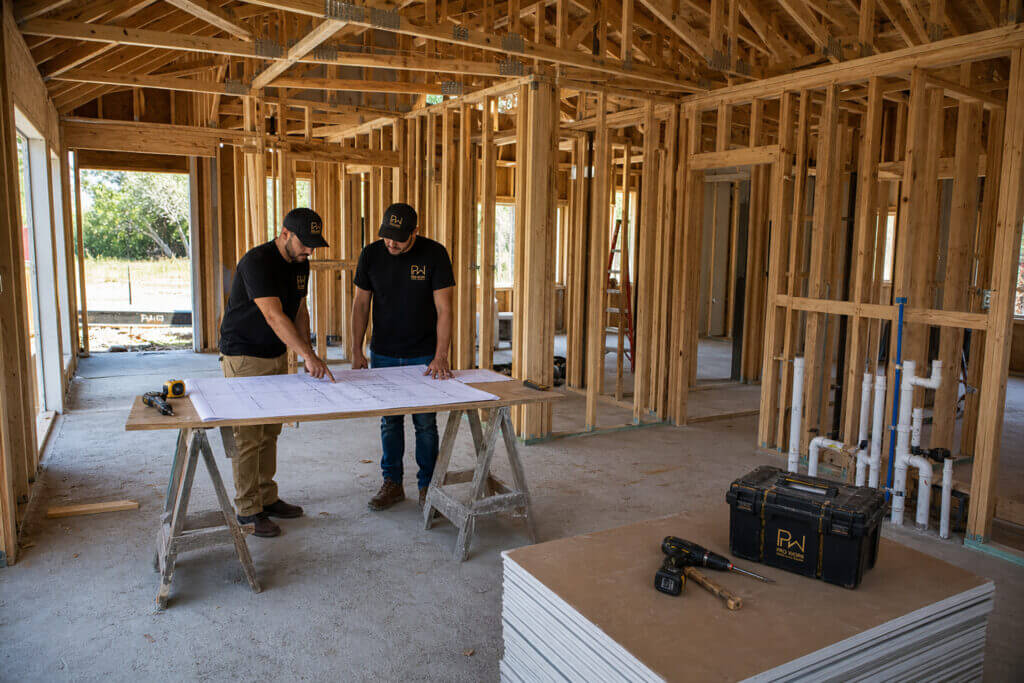
How the Architect + Contractor Model Works


The Hidden Cost of Two Separate Contracts
● The budget disconnect:
Architects design for excellence. Contractors build to budgets. When the contractor's bid comes back and the beautiful plans cost 40% more than expected, you pay the architect again to redesign — and repeat the bidding process.
● The accountability gap:
When something goes wrong during construction, both parties have contractual protection — and the homeowner often ends up in the middle, funding the dispute resolution.
● The communication overhead:
Every design change that arises during construction requires re-engaging the architect for updated plans, then re-pricing with the contractor. Time, fees, and delays compound.
● The constructability gap:
Architects design what should be built. Contractors build what can be built. When these two things don't align — and they often don't in older Central Florida homes with hidden conditions — the homeowner absorbs the cost of reconciling them.
SIDE BY SIDE COMPARISON
Moving costs are consistently underestimated. When a homeowner decides to sell their current home and buy a new one in Central Florida, the true all-in cost looks something like this:
FACTOR
- Team structure
- Design fees
- Budget alignment
- Change management
- Constructability
- Oversight
- Timeline
- Risk
ARCHITECT + CONTRACTOR
- Two separate companies, two separate contracts, separate accountability
- 8–15% of project cost paid separately to architect
- Budget often unknown until contractor bids after design is complete
- Every change re-engages both parties — time and fees compound
- Architect may design what can't be built as specified in your home
- Periodic architect oversight during construction — usually not continuous
- Design-bid-redesign-rebid cycle can add months before construction starts
- Homeowner absorbs risk when design and construction teams disagree
DESIGN-BUILD (PRO WORK)
- One integrated team, one contract, single accountability
- Design fee included within the Pro Work engagement — no separate architect invoice
- Budget built into the design phase — no sticker shock after plans are drawn
- Changes handled internally — faster, less expensive, less disruptive
- Builders are part of the design process — what gets drawn can be built
- Dedicated Pro Work project manager on site throughout the entire build
- Integrated design and pre-construction — faster start to construction
- One team owns the outcome — risk doesn't fall on the homeowner
When an Independent Architect Is Worth It
There are genuine cases where engaging an independent architect makes sense — and we’ll be honest about them. For highly complex custom projects requiring deep structural engineering, landmark properties with preservation requirements, or homeowners who have a specific architect relationship they value, the traditional model can work well.
The key is entering it with clear eyes about the total cost — including design fees, potential redesign cycles, and the management overhead of coordinating two separate professional relationships throughout your project.


What Pro Work's Design Process Delivers
How Pro Work Delivers This:
Frequently Asked Questions
Yes. If you’ve engaged an architect and have completed or in-progress plans, Pro Work can review them and provide a construction proposal. In some cases, we can build from existing plans. We’ll give you an honest assessment of whether the plans are construction-ready and flag any concerns before you commit to a construction contract.
Yes. Pro Work manages the entire design process in-house — from space planning and 3D walkthroughs to permit-ready construction documents — and coordinates licensed structural engineers as part of the project scope whenever the work requires it.
The design fee is included within the Pro Work engagement — no separate architect invoice, no 8–15% design contract layered on top of construction. One transparent, itemized price covers design through delivery.
Ready to Start Your Project With Pro Work?
Schedule a free 15-minute Discovery Call — no pressure, no commitment.