
The Complete Guide to Home Remodeling in Central Florida
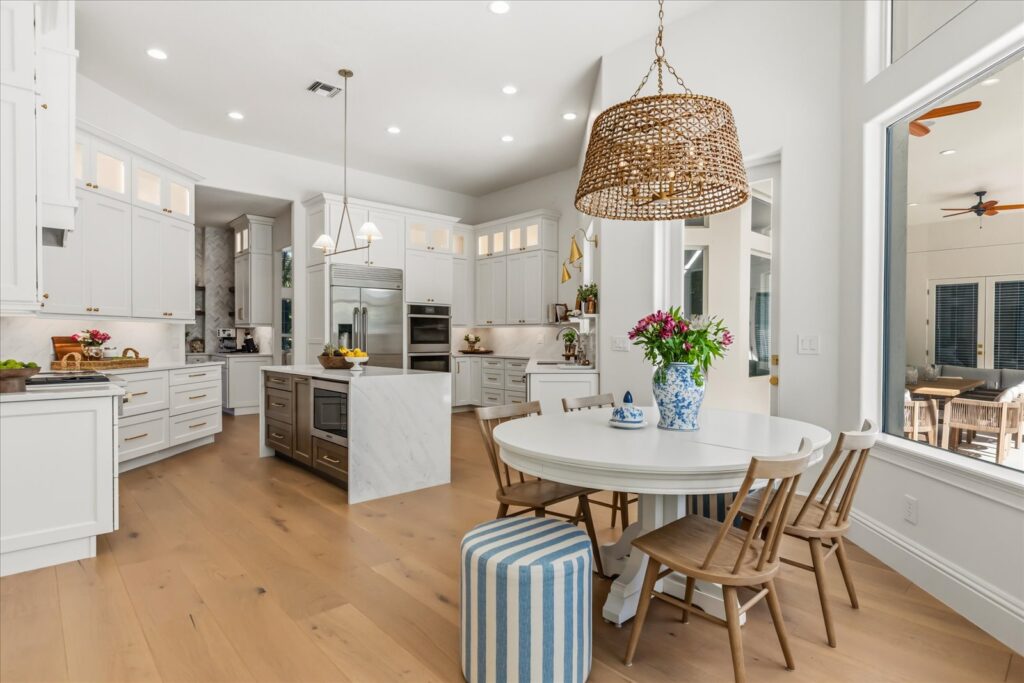
The Complete Guide to Home Remodeling in Central Florida
This guide exists to give you the information you need to approach that decision with confidence. We cover everything — what remodeling costs in the Central Florida market, what permits you need, how Florida’s climate shapes your material choices, what’s trending in 2025, how to vet a contractor, and what questions to ask before you ever sign anything.
It’s written by Pro Work Design, Build & Remodel — a family-owned design-build firm based in Central Florida. We’ve shared everything we know because we believe an informed client makes a better project. And a better project makes a better community.
Chapter 1
Why Central Florida Homeowners Are Remodeling in 2026
Homeowners across Seminole County and the Orlando metro are choosing to remodel — not move. Here’s what’s driving the 2026 remodeling surge.
The Stay-Put Shift
Nationally, homeowner remodeling expenditures are projected to reach $524 billion in early 2026 — a record high representing 2.4% growth year-over-year. Central Florida continues to be one of the country’s most active remodeling markets, driven by population growth, aging housing stock, and strong home equity gains.

What Central Florida Homeowners Are Prioritizing
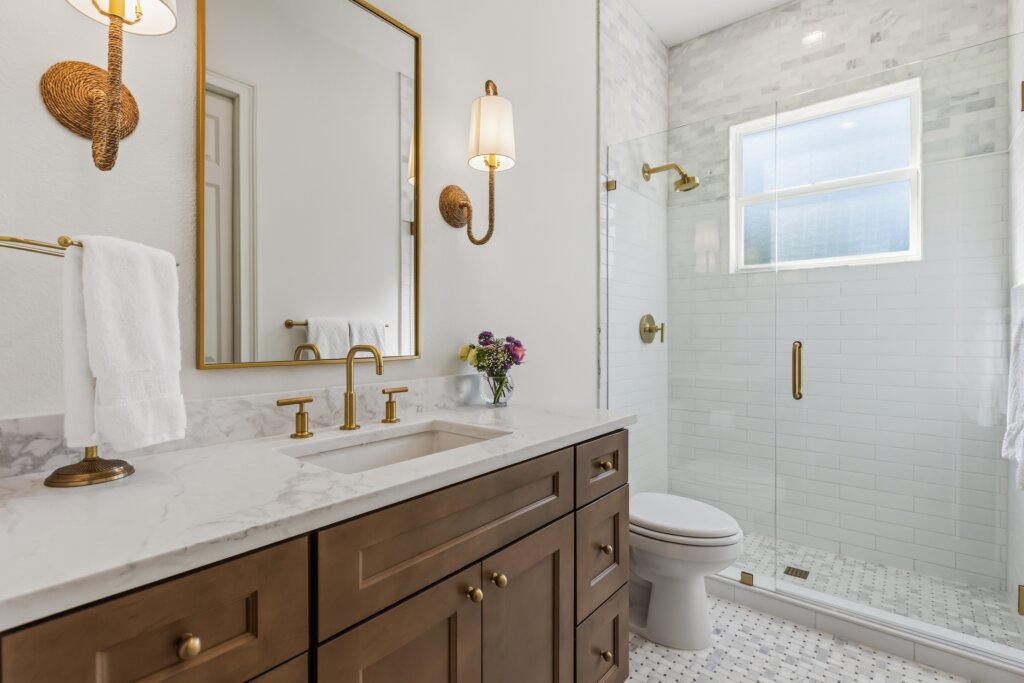
Kitchen renovations
the #1 room for value, function, and daily enjoyment
Bathroom upgrades
evolving from basic to spa-inspired retreats
Whole-home renovations
coordinating finishes and modernizing aging systems
Home additions and ADUs
adding square footage to accommodate growing families or generate rental income
Energy efficiency
heat pumps, impact windows, insulation upgrades that reduce utility bills 20–40%
Outdoor living
screen enclosures, covered lanais, and outdoor kitchens that maximize Florida's year-round climate
- MATERIAL COSTS & TARIFFS
- SKILLED LABOR SHORTAGE
- 9TH EDITION FLORIDA BUILDING CODE
- FASTER PERMITTING
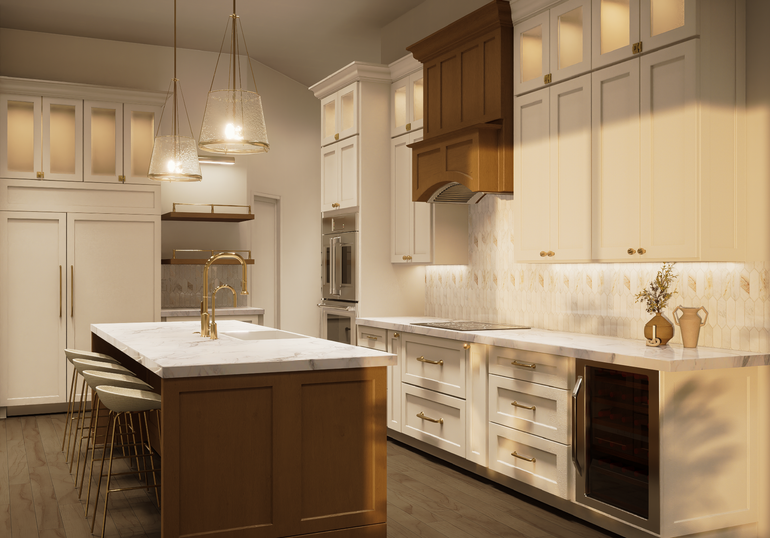
The Median Florida Home Is Over 35 Years Old
Chapter 2
How to Budget Your Remodel in 2026
Budgeting is where most homeowners get into trouble. Here’s how to plan realistically for today’s Central Florida market — including the factors that are different in 2026.
2026 Cost Benchmarks for Central Florida
Project Type
- Kitchen — Small
- Kitchen — Medium
- Kitchen — Large
- Bathroom — Master
- Bathroom — Hall/Guest
- Bathroom — Powder Room
- Whole Home — Under 1,500 sqft
- Whole Home — 1,600–2,200 sqft
- Whole Home — 3,000+ sqft
- Home Addition / ADU
Entry Level
- $50,000+
- $65,000+
- $90,000+
- $25,000+
- $20,000+
- $5,000+
- $120,000+
- $160,000+
- $240,000+
- $275/sqft
Mid-Range
- $65,000+
- $80,000+
- $115,000+
- $35,000+
- $25,000+
- $8,000+
- $150,000+
- $200,000+
- $300,000+
- $325/sqft
Premium
- $90,000+
- $110,000+
- $150,000+
- $50,000+
- $32,000+
- $14,000+
- $200,000+
- $265,000+
- $400,000+
- $375/sqft
- Step 1 — Define the Scope
- Step 2 — Add Your Contingency
- Step 3 — Account for 2026-Specific Cost Drivers
- Steel & aluminum tariffs (up to 50%): Affects structural framing, cabinets with metal components, hardware, and HVAC
- Copper tariff (50%): Directly impacts plumbing and electrical budgets
- Skilled labor premium: Experienced tradespeople now command $130–$200/hour in Florida for electrical; comparable premium for plumbing and tile
- Lead times: Some European-imported fixtures and specialty tile face 12-week+ backlogs in 2026 — plan accordingly
- Step 4 — Explore Financing Before You Need It
Pro Work Rule: We include a 5% material escalation clause in our contracts. If material costs rise more than 5% due to tariffs or supply disruption after contract execution, we document it, show you the invoices, and discuss options together. No surprises.
Rates from 7.8% APR | Terms up to 20 years | No home equity required
Chapter 3
Return on Investment: What Pays Off in Central Florida
Top ROI Projects in 2026
Project
- Minor kitchen remodel
- Mid-range bathroom remodel
- Garage door replacement
- Steel entry door replacement
- Energy-efficient windows
- Outdoor living / screen enclosure
- Wood deck addition
Approx. ROI
- 85–113%
- 74–80%
- 90–268%
- 85–188%
- 63–70%
- 70–80%+
- ~95%
Why It Works
- Updates surfaces without costly layout changes
- Highest bathroom ROI since 2007
- Curb appeal + affordability
- Security + first impression
- Utility savings + buyer demand
- Leverages Florida climate year-round
- Adds functional square footage
- Rule 1: Mid-Range Beats Ultra-Luxury at Resale
- Rule 2: Minor Kitchen Updates Beat Full Kitchen Gut Jobs
- Rule 3: Timeless Design Protects Your Investment Longer
- Rule 4: Energy Efficiency Is Now a Buyer Expectation
When ROI Isn't the Point
Chapter 4
Kitchen Remodeling in Central Florida
2026 Kitchen Trends
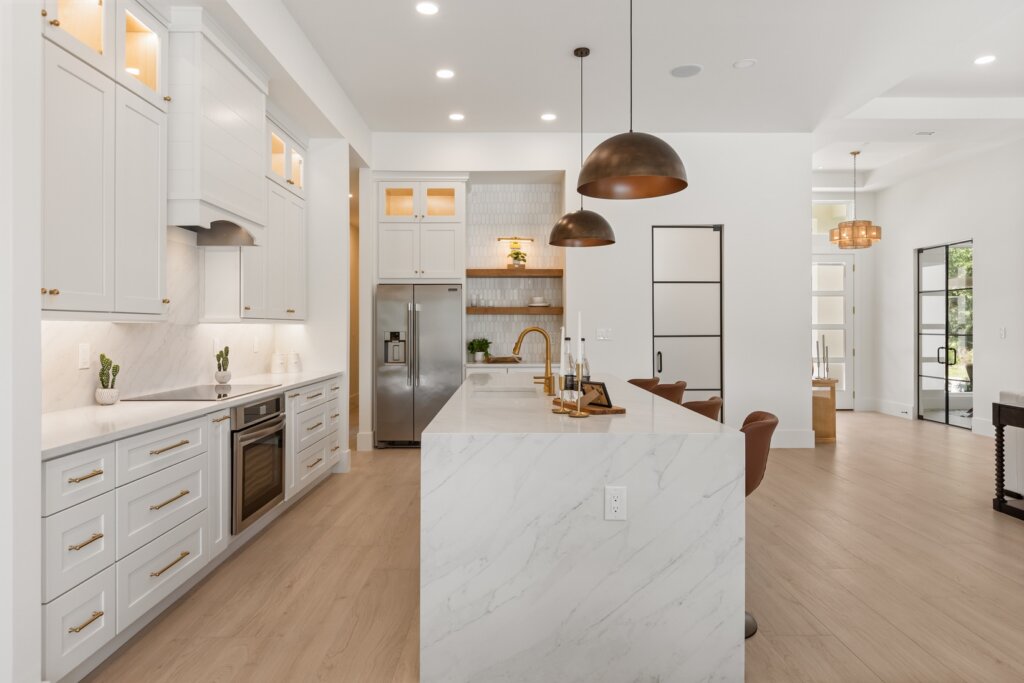
What's Defining Kitchen Design in 2026
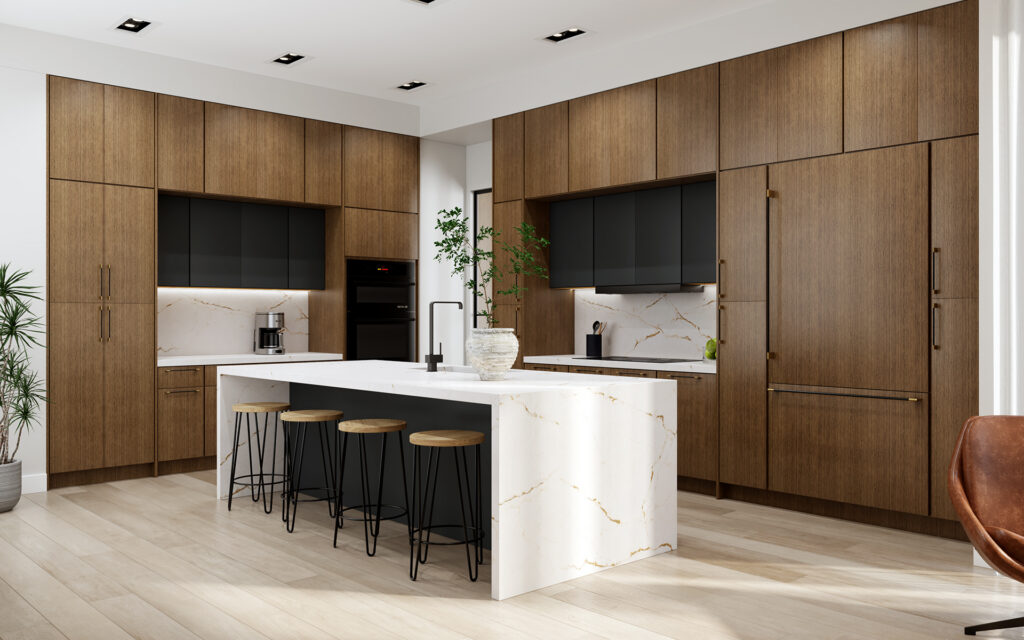
- Warm neutrals and natural materials — natural oak cabinetry, creamy whites, earthy taupes; wood tones adding character without overwhelming the space
- Organic shapes — rounded island corners, arched cabinet details, curved range hoods softening the overall feel
- Smart kitchen integration — touch-activated faucets, smart refrigerators with inventory management, induction ranges, under-cabinet LED systems
- Expanded footprints — 76% of designers expect kitchen footprints to increase over the next three years as kitchens absorb dining and living functions
- Multi-generational functionality — Gen X (35% of kitchen remodel clients) prioritizes features that support multi-generational living
- Custom storage — pull-out pantry systems, deep drawers replacing upper cabinets, integrated organizers
Kitchen Remodeling Cost Breakdown
Component
- Cabinetry
- Countertops
- Appliances
- Flooring
- Plumbing & Fixtures
- Electrical & Lighting
- Labor & Permits
Entry Level
- $8,000–$18,000
- $2,500–$6,000
- $3,000–$7,000
- $3,000–$6,000
- $1,500–$4,000
- $2,000–$5,000
- $8,000–$15,000
Mid-Range
- $20,000–$40,000
- $6,000–$12,000
- $8,000–$18,000
- $6,000–$12,000
- $4,000–$10,000
- $5,000–$10,000
- $12,000–$25,000
Premium
- $45,000–$80,000+
- $12,000–$25,000+
- $20,000–$60,000+
- $12,000–$20,000+
- $10,000–$25,000+
- $10,000–$20,000+
- $25,000–$45,000+
TARIFF IMPACT ON KITCHENS
What to Keep vs. What to Change
Most experienced contractors will tell you: keep the layout when you can. Moving the kitchen sink, dishwasher, or range to a new location requires relocating plumbing stacks and electrical circuits — adding $15,000–$30,000+ to an otherwise straightforward remodel. The best kitchen renovations work with the existing footprint and invest those dollars in surfaces, storage, and appliances instead.
Chapter 5
Bathroom Remodeling in Central Florida
Bathrooms are delivering their highest ROI since 2007 in 2026 — and Central Florida buyers increasingly expect spa-caliber spaces. Here’s how to plan yours.
2026 Bathroom Design Trends
Bathrooms have evolved from purely functional spaces to personal wellness sanctuaries. The 2026 trends center on calm, texture, and hotel-inspired comfort:
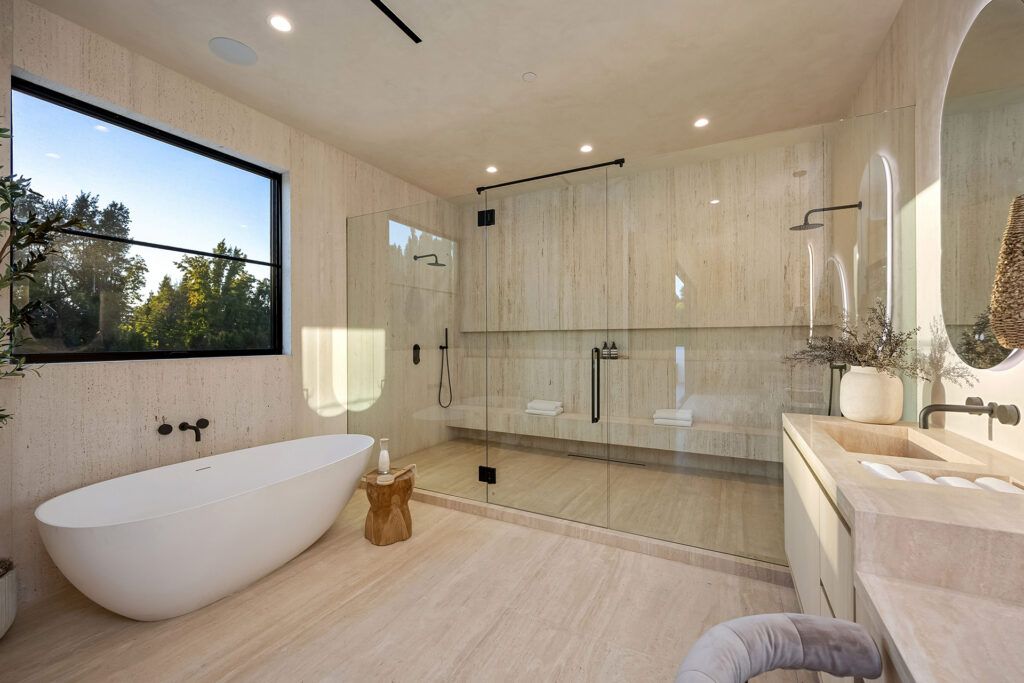
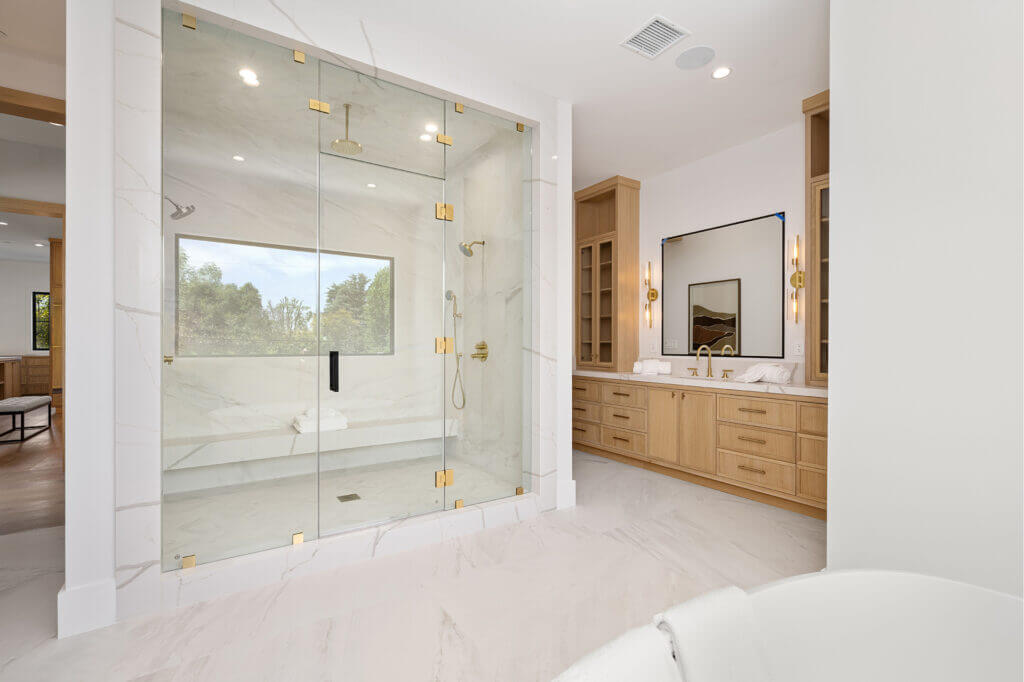
- Spa-inspired master suites — rainfall showerheads, curbless walk-in showers with built-in seating, freestanding soaking tubs, steam options
- Oversized tiles and continuous wall panels — creating clean, seamless visual flow with minimal grout lines
- Floating vanities with personality — fluted wood textures, integrated lighting, furniture-style bases
- Smart technology — temperature-controlled heated floors, smart mirrors with adjustable lighting, touchless faucets
- Timeless color palettes — white, gray, and warm beige as foundations; colored accents in accessories rather than permanent tile
- Natural materials — stone, travertine, and warm wood tones adding organic texture without humidity risk
2026 Bathroom Cost Guide — Central Florida
Bathroom Type
- Master / Primary Bath
- Hall / Guest Bathroom
- Powder Room
Entry Level
- $25,000+
- $20,000+
- $5,000+
Mid-Range
- $35,000+
- $25,000+
- $8,000+
Premium
- $50,000+
- $32,000+
- $14,000+
ROI Context for 2026
Upscale bathroom remodels ($50,000–$100,000+) return 36–55% at resale. If you’re doing this tier, do it because you’ll enjoy it for years — not to recoup at sale.
FLORIDA-SPECIFIC NOTE
Chapter 6
Permits, Codes & Inspections in Central Florida
Permits protect your investment, your family, and your ability to sell. Here’s what Central Florida homeowners need to know about the 2026 regulatory landscape.
- Applications not processed within these windows may be deemed approved by default
- Non-residential and multifamily permits (under 25,000 sqft / up to 50 units) must be processed within 60 business days
- Applications not processed within these windows may be deemed approved by default
- Any structural changes (removing walls, adding load-bearing elements, home additions)
- Electrical work beyond simple replacement (panel upgrades, new circuits, rewiring)
- Plumbing modifications (moving drains, adding fixtures, rerouting supply lines)
- HVAC installation or significant modification
- Roofing beyond minor repairs
- Window and door replacements in wind-borne debris regions
- Any work exceeding $2,500 in most Seminole County jurisdictions
- Cosmetic work: painting, flooring replacement, cabinet refacing
- Minor drywall repair (under 10 square feet)
- Replacing fixtures without altering plumbing/electrical
- Landscaping and most exterior decorative work
- Stricter wind-load calculations using ASCE 7-22 standards — affecting window and door specifications
- Enhanced impact resistance standards for buildings in designated high-risk zones
- Elimination of simplified wind-load methods; more rigorous analytical approach required
- Updated energy efficiency requirements
- Roofing: elimination of the old '25% replacement rule' in favor of updated scope-based triggers
PRO WORK GUIDANCE
Why Unpermitted Work Costs You
Always verify permits are pulled before work begins. Pro Work handles all permitting as part of every project — it’s included, not an add-on.
Chapter 7
How to Choose the Right Contractor
The Non-Negotiables: Verify Before Anything Else
- Active Florida contractor license — search the DBPR database at myfloridalicense.com
- General liability insurance — minimum $1 million per occurrence; ask for the certificate
- Workers' compensation insurance — required for companies with employees; verify it's current
- Physical business address — not just a P.O. box or residential address
- Verifiable references — recent projects in Seminole County or the greater Orlando area
License Types Matter
Florida has two primary contractor license tiers for building work:
- Certified Building Contractor (CBC): State-certified license valid across all 67 Florida counties. Authorized for residential and commercial construction projects of all scales.
- Registered Contractor: County-specific registration only. Limited to the jurisdiction(s) where registered.
For any project involving structural work, additions, or commercial spaces, verify that your contractor holds a Florida Certified Building Contractor (CBC) license — not just a county registration.
Getting and Comparing Estimates
Get at least 3 written estimates for any project over $10,000. When comparing:
- Scope should be identical — make sure each contractor is pricing the same work
- Watch for allowances — low estimates often hide vague 'allowances' that will inflate once you make real selections
- Verify permit inclusion — permits should be included, not a separate billing item
- Payment schedule should be milestone-based — never pay more than 10–15% upfront; avoid contractors demanding more than 50% before starting
- Timeline commitments should be in writing — a detailed schedule is a sign of a professional operation
Red Flags in 2026
Florida has two primary contractor license tiers for building work:
- Requesting large cash payments or deposits over 10% before work begins
- No physical business address or verifiable Florida license
- Extremely low bid without explanation — often signals missing scope, no insurance, or unlicensed work
- Pressure to decide 'today only' — quality contractors don't use high-pressure tactics
- Can't provide proof of insurance instantly
- Refuses to pull permits or offers to skip them to 'save you money
Chapter 8
The Remodeling Process: What to Expect
Understanding the phases of a remodel sets realistic expectations and reduces stress. Here’s how a professional remodel moves from first conversation to final walkthrough

Phase 1: Discovery & Design
- Initial consultation (on-site or virtual): Scope discussion, budget reality-check, timeline overview
- Site visit and measurements: Detailed field conditions, photos, and any early discovery (electrical panel age, plumbing configuration, structural notes)
- Design phase (for complex projects): Space planning, material selections, 3D visualization, finalized drawings
- Proposal and contract execution: Detailed written scope, payment schedule, timeline, and change order process
Phase 2: Pre-Construction
- Permit application: Submitted by your contractor; HB 267 now requires 30-business-day processing for residential
- Material ordering: Critical in 2026 — specialty items (imported tile, custom cabinetry, European fixtures) need to be ordered immediately to avoid 8–12 week delays
- Subcontractor scheduling: Licensed plumbers, electricians, HVAC, tile setters — booked in advance
- Home prep: Furniture protection, dust barriers, designated access path through your home

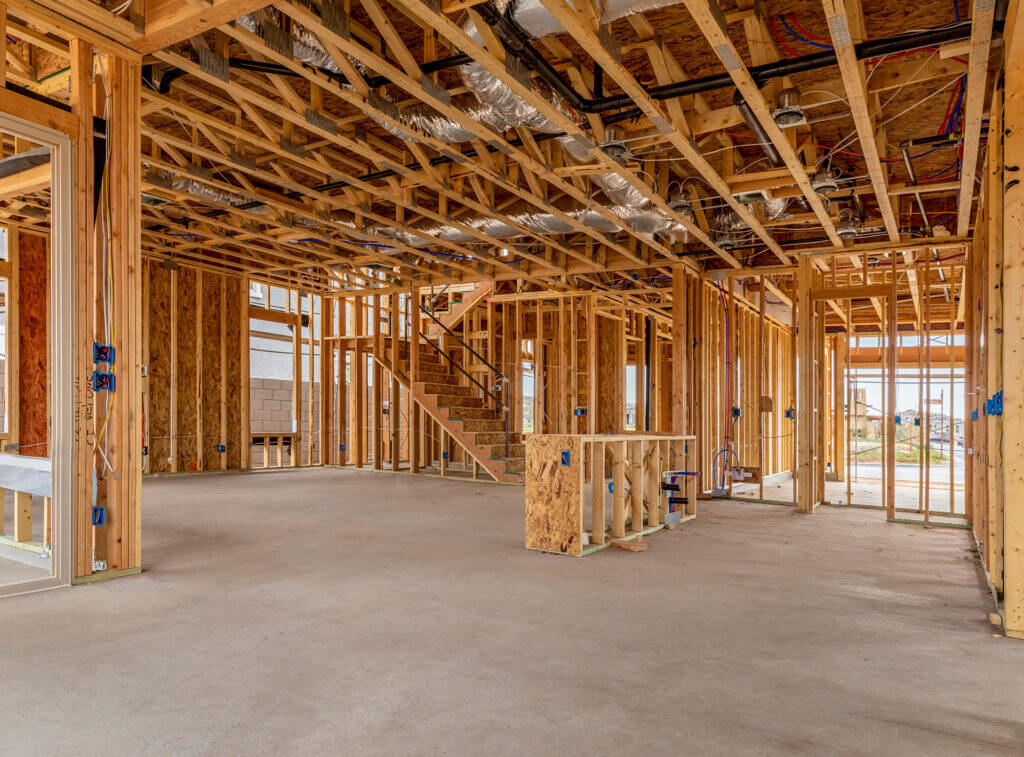
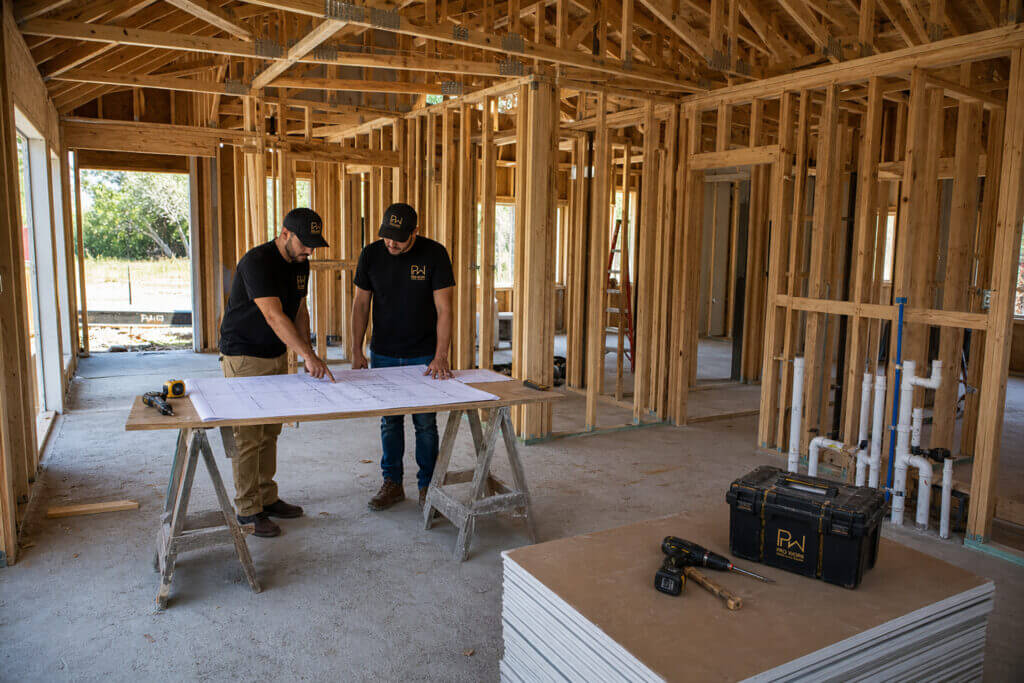
Phase 3: Construction
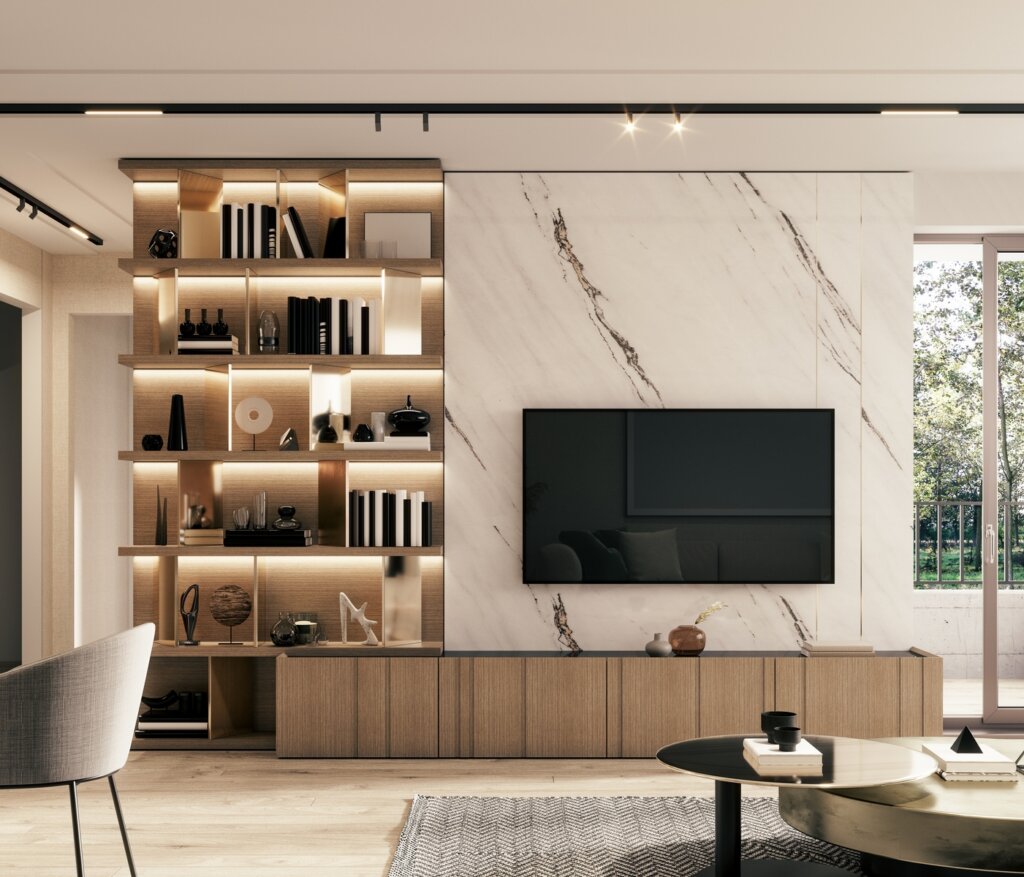
Phase 4: Selections & Change Orders
Client selections (tile, cabinet hardware, paint colors, fixture models) are one of the leading causes of project delays. Make your selections early — ideally before construction begins. Any changes after contract execution should be documented as written change orders, approved by you before work proceeds
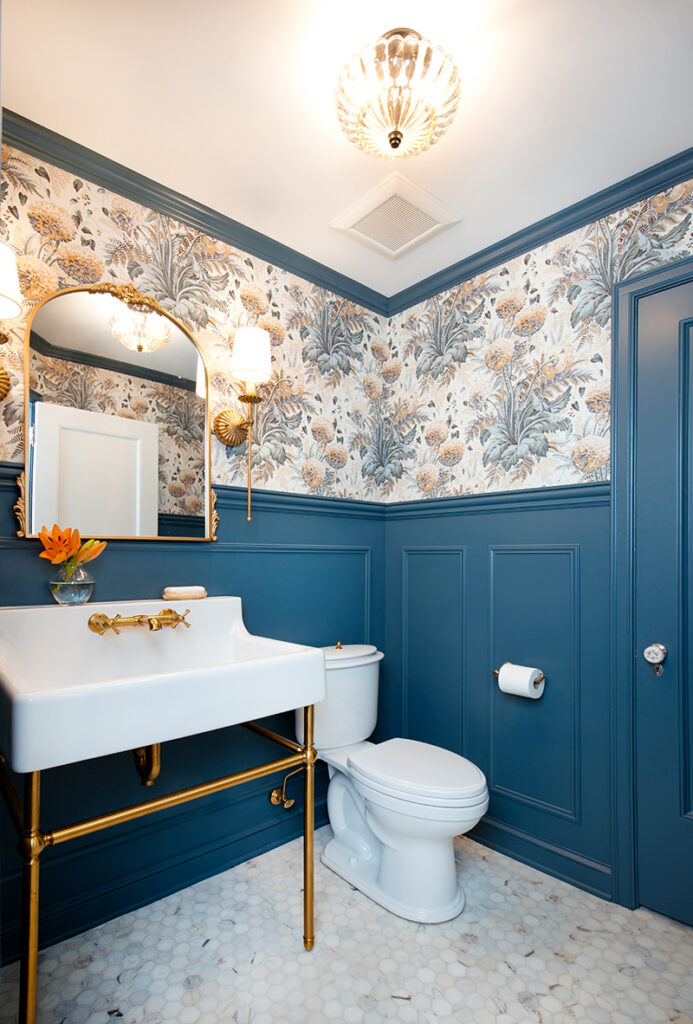
Phase 5: Completion
- Final inspections: Required by your local building department; your contractor closes all open permits
- Punch list: A written list of remaining items; completed before final payment
- Final walkthrough: Walk the completed project with your contractor; confirm every item meets expectation
- Warranty documentation: Your contractor provides written warranty terms at project completion
INSPECTIONS ARE PROTECTION
Chapter 9
Home Additions & ADUs in Central Florida
Adding square footage — whether attached, detached, or as an ADU — is one of the highest-value investments a Central Florida homeowner can make in 2026.
Why Additions Are in Demand
Multigenerational living continues to rise across the Orlando metro. Families are adding guest suites, in-law units, home offices, and flex rooms to accommodate aging parents, returning adult children, and the ongoing normalization of remote work. ADUs (Accessory Dwelling Units) are also increasingly popular as rental income generators.

Types of Additions
- Room addition: Expanding the footprint of an existing room or adding a new room to the home
- Second story addition: Adding a full or partial upper level
- Attached garage conversion: Converting an existing garage to living space
- Detached ADU: A standalone dwelling unit on the same lot — permitted for rental or family use
- Attached ADU: An addition that creates a separate dwelling unit attached to the main home
- Bump-out: A smaller, targeted expansion (typically 3–10 feet) of a specific room
2026 Addition & ADU Costs — Central Florida
Bathroom Type
- Home Addition (per sqft)
- Detached ADU (600–800 sqft)
- Garage Conversion
- Room Bump-Out
Entry Level
- $275/sqft
- $165,000–$220,000
- $35,000–$60,000
- $30,000–$60,000
Mid-Range
- $325/sqft
- $200,000–$265,000
- $55,000–$90,000
- $55,000–$90,000
Premium
- $375/sqft
- $240,000–$320,000+
- $80,000–$130,000+
- $85,000–$140,000+
Key Considerations for Central Florida Additions
- Setback requirements: Seminole County and all incorporated municipalities have specific setback rules governing how close structures can be to property lines. Verify zoning before designing.
- HOA approval: Most Central Florida HOAs require architectural review committee approval for additions. This can add 30–90 days before permitting.
- Flood zone designation: Properties in FEMA flood zones may have elevation requirements that affect foundation costs for new structures.
- Impact windows/doors required: All new openings in the Central Florida wind-borne debris region must have impact-rated products.
- Utility connections: ADUs require their own electrical sub-panel; some require separate utility service — factor this into your budget.
ADU TIP
Seminole County has streamlined ADU permitting in recent years. A detached ADU on a standard residential lot is generally permissible and can generate $1,200–$2,000/month in rental income — making it one of the highest-return additions for homeowners planning to stay long-term.
Chapter 10
Whole-Home Renovation: Planning a Full-House Remodel
A whole-home renovation is the most complex undertaking a homeowner can tackle. With the right planning and the right partner, it can also be the most transformative.

When a Whole-Home Makes Sense
- You purchased a dated or distressed home intentionally
- Multiple systems (electrical, plumbing, HVAC, roof) are at end of life simultaneously
- You're making structural changes across multiple rooms
- You want cohesive finishes and design throughout the home
- An addition triggers so much adjacent work that a full renovation is more cost-effective than a phased approach
2026 Whole-Home Cost Guide — Central Florida
Home Size
- Under 1,500 sqft
- 1,600–2,200 sqft
- 2,300–3,000 sqft
- 3,000+ sqft
Entry Level
- $120,000+
- $160,000+
- $200,000+
- $240,000+
Mid-Range
- $150,000+
- $200,000+
- $250,000+
- $300,000+
Premium
- $200,000+
- $265,000+
- $325,000+
- $400,000+
These ranges include permits, painting, fixtures, and standard appliances. Structural changes, custom millwork, luxury appliances, and premium finishes throughout will exceed these numbers.
The Critical Path for Whole-Home Projects
A whole-home renovation follows a strict sequence. Deviating from it creates costly rework:
- Demolition and discovery — uncover what's actually there before finalizing scope
- Structural work — any load-bearing changes, beam installations, floor system modifications
- Rough-in trades — plumbing, electrical, HVAC, all opened up for inspection before closing
- Inspections — rough-in inspections close before insulation and drywall proceed
- Insulation and air sealing
- Drywall and plaster
- Flooring — typically before cabinetry to allow for full installation without transitions
- Cabinetry and millwork
- Countertops — templated after cabinets are installed
- Fixtures, appliances, trim
- Paint — often the final major trade before punch list
- Final inspections and certificate of occupancy (if required)
LIVING ARRANGEMENTS
Chapter 11
Financing Your Central Florida Remodel
You don’t have to wait until you’ve saved every dollar to get your remodel started. Here are the financing options available to Central Florida homeowners in 2026.
Common Remodeling Financing Options

Home Improvement Loans (No Equity Required)
Pro Work partners with HFS Financial, which connects homeowners with a network of lenders for home improvement loans that don’t require home equity. Key terms:
- Rates starting at 7.8% APR fixed
- Loan amounts from $5,000 to $300,000
- Terms from 1 to 20 years
- No home equity required
- No impact to your credit score to check your rate
- Funding as fast as 1 business day after approval
- No prepayment penalties
- Funds paid directly to the borrower — you control the money
Home Equity Line of Credit (HELOC)
If you’ve built equity in your home — Central Florida homeowners have seen significant appreciation since 2019 — a HELOC gives you a revolving credit line secured by your home. Rates are typically variable and tied to the prime rate. Best for phased projects where you draw funds incrementally.

Cash-Out Refinance
Refinancing your mortgage to extract equity was popular when rates were low. In the current rate environment, this option makes sense primarily for homeowners who haven’t yet refinanced or have older loans at above-market rates. Evaluate carefully with a mortgage professional.
Construction-to-Permanent Loan
For large-scale projects ($150,000+), especially additions or ADUs, a construction loan that converts to a permanent mortgage may offer the most favorable structure. Works best for well-documented projects with licensed contractors and complete plans.

Pro Work's Recommendation
HFS Financial | Rates from 7.8% APR | $5K–$300K | 1–20 Year Terms
Chapter 12
Why Central Florida Homeowners Choose Pro Work
Pro Work LLC was founded to solve the problems homeowners told us about most: contractors who don’t show up, don’t communicate, and don’t stand behind their work. We built the company around those three commitments
Who We Are

Our Service Area
We serve all of Seminole County — Lake Mary, Sanford, Longwood, Oviedo, Winter Springs, Altamonte Springs, Casselberry — plus the greater Orlando metro including Winter Park, Maitland, Apopka, Windermere, Dr. Phillips, and DeBary/Deltona to the north

What We Build
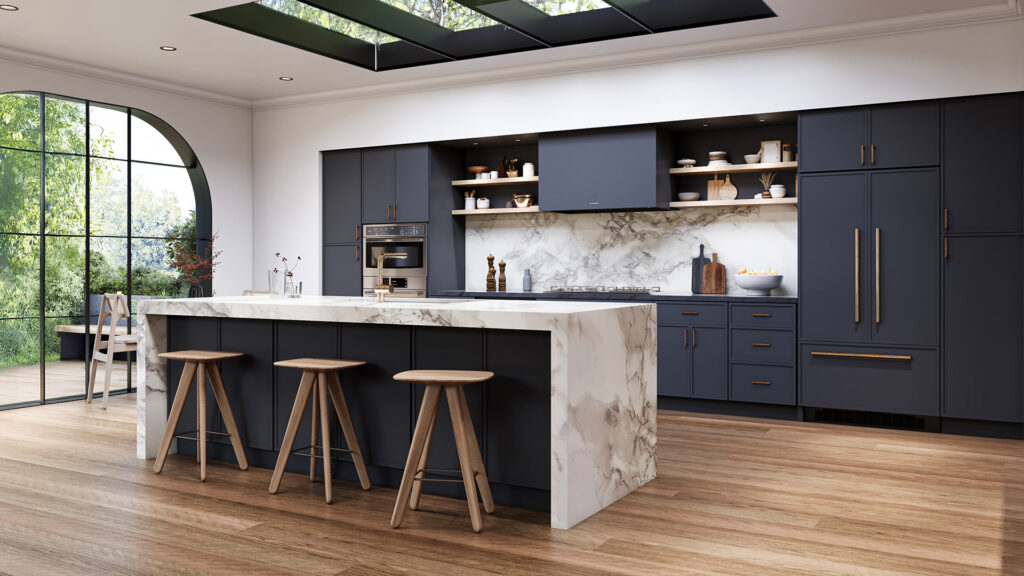
- Kitchen renovations — complete remodels from cabinet replacement to full layout transformations
- Bathroom renovations — master suites, hall bathrooms, powder rooms, and full primary suite additions
- Whole-home renovations — coordinated, single-contract full-house remodels
- Home additions and ADUs — permitted additions, detached guest houses, and accessory dwelling units
- Custom builds — ground-up custom homes and design-build projects
- Commercial build-outs — office, retail, and light industrial construction and renovation
Our Commitments
- Show up — every scheduled appointment, every time. No ghosting. No excuses
- Communicate — weekly project updates, digital selection approvals through our project management system, documented change orders
- Stand behind our work — 3-year residential warranty, 1-year commercial warranty, backed in writing
- Permit everything — every project is properly permitted and inspected. We don't offer shortcuts because they cost homeowners more in the long run.
- Transparent pricing — detailed written scope and pricing. No mystery line items, no surprise change orders.
The Pro Work Promise
“I will never leave a client hanging. I will always show up, communicate, and stand behind our work.”
— Edickson Mata, Founder & CEO