
ACCESSORY DWELLING UNITS | CENTRAL FLORIDA
ADUs in Central Florida
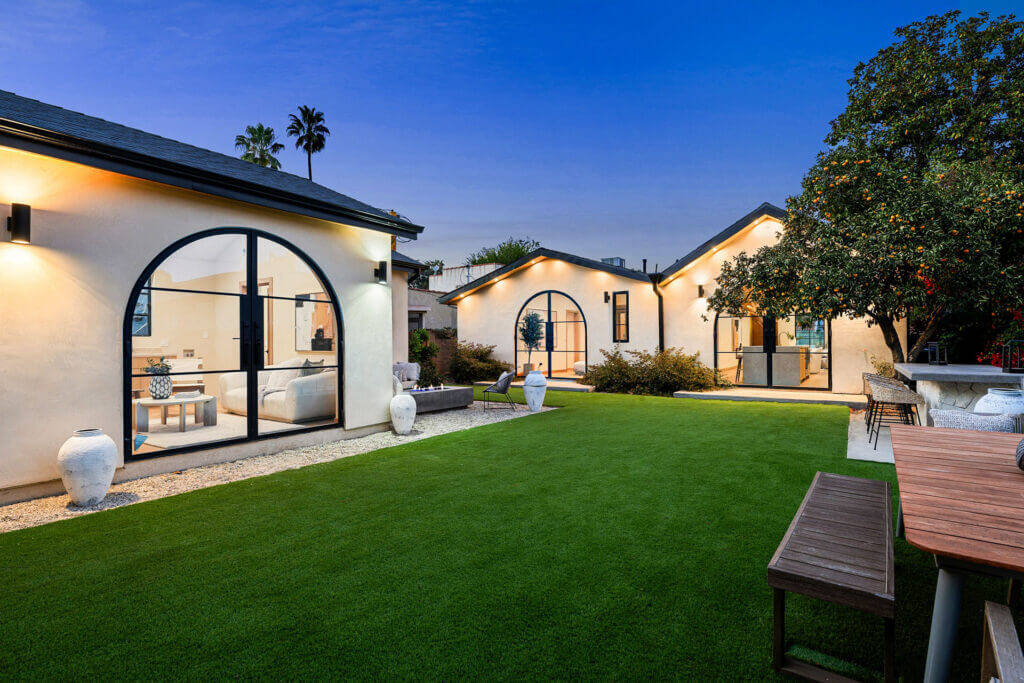
ADUs in Central Florida
Rental Income. Family Housing. Expanded Living. Built on Your Property — Designed to Last.
An Accessory Dwelling Unit is a fully independent living space with its own bedroom, bathroom, kitchen, and private entrance, built on the same lot as your primary home. It can be detached in the backyard, attached to the main structure, or created by converting an existing space such as a garage.
Homeowners in Central Florida build ADUs for three main reasons: rental income, housing for family members, and increasing long-term property value. Florida regulations are becoming more ADU-friendly, and Pro Work designs and builds these spaces as complete turnkey projects, from feasibility planning to final inspection.
$275–$375
Per sq ft — Pro Work ADU pricing
12–20+
Weeks from permit to move-in
1–5%
Annual rental yield — typical Central FL ADU
What Exactly Is an ADU?
An Accessory Dwelling Unit is a secondary, legally approved living space on a residential lot that already includes a primary home. To qualify as an ADU, the unit must have its own kitchen or kitchenette, bathroom, sleeping area, and a separate entrance.
ADUs are known by different names depending on their type and layout, including backyard cottage, in-law suite, granny flat, carriage house, garage apartment, and detached guest house. All refer to the same idea of an independent living unit on a single-family property.
ADUs differ from home additions in one key way. An ADU functions as a fully independent dwelling, while a home addition expands your existing space. Both support multi-generational living, but only an ADU can generate rental income as a separate legal unit.
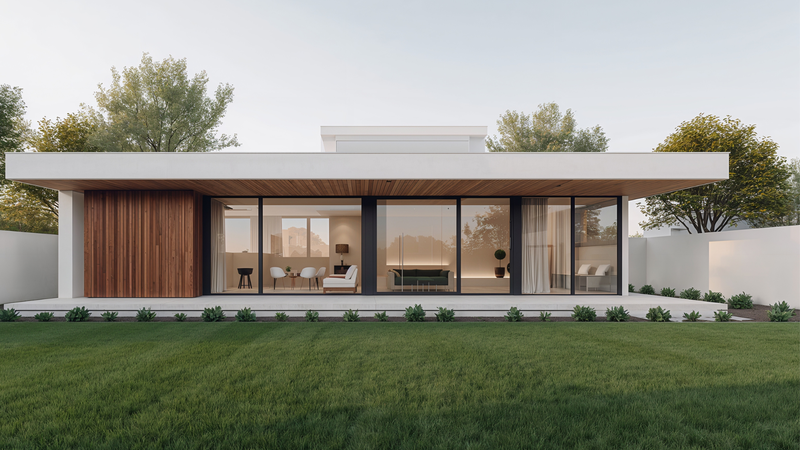
REASON 1
RENTAL INCOME
Your property generates monthly income — without buying a second property.
Central Florida’s rental market remains one of the strongest in the Southeast. Continued population growth, a large workforce, and a steady tourism economy create reliable long-term rental demand across Orange, Seminole, and Volusia counties. Adding an ADU to your existing property allows you to benefit from this demand without purchasing a separate investment property or dealing with the challenges of managing real estate in another location.
- Long-term rental income — a well-built 600–800 sq ft ADU in Central Florida typically rents for $1,200–$1,800/month depending on location and finishes
- Short-term rental potential — Central Florida's proximity to major attractions creates Airbnb/VRBO demand that can generate significantly higher per-night yields in the right locations
- Offset your mortgage — rental income from an ADU can fully or partially cover your primary home's monthly payment
- Build equity in your existing property rather than a second one — simpler financing, lower transaction costs, and one property to manage
REASON 2
MULTI-GENERATIONAL LIVING
Your parents nearby — but not in your house. Your adult kids returning home — with their own space.
Multi-generational living is one of the fastest-growing housing trends in the United States for good reason. Aging parents want to stay close to family while maintaining their independence. Adult children returning to Central Florida need more affordable housing near home. Grandparents want to be close to grandchildren without sharing daily living space. An ADU addresses all of these needs in one structure, offering true independence for everyone on the property.
- Private entrance, private bathroom, private kitchen — genuine independence for the occupant
- Close enough for daily connection, separate enough for privacy on both sides
- Accessibility features incorporated from the start — curbless showers, wider doorways, grab bars, single-level design
- Future flexibility — a unit built for aging parents today can become rental income tomorrow
- Avoids the emotional and financial complexity of assisted living or long-distance caregiving
REASON 3
HOME OFFICE OR CREATIVE STUDIO
A dedicated workspace completely separate from your home — without a commute.
Remote work has permanently changed what professionals expect from their homes. A desk in a spare bedroom can work, but a fully separate structure with its own entrance, dedicated climate control, and complete sound separation from the main house works far better. Pro Work designs and builds ADUs specifically for professionals, creatives, and entrepreneurs who need a true workspace at home, with the flexibility to convert it into rental income in the future.
- Acoustic separation — complete sound isolation from the main home's daily activity
- Professional-grade electrical — dedicated circuits for equipment, reliable connectivity
- Client-accessible entrance — separate from your family's main living areas
- Designed to convert — layout and mechanical systems planned for future residential use if your needs change
ADU Types Pro Work Designs and Builds
The right ADU type depends on your lot configuration, your HOA restrictions, your budget, and your intended use. Pro Work builds all of the following ADU types across Central Florida.
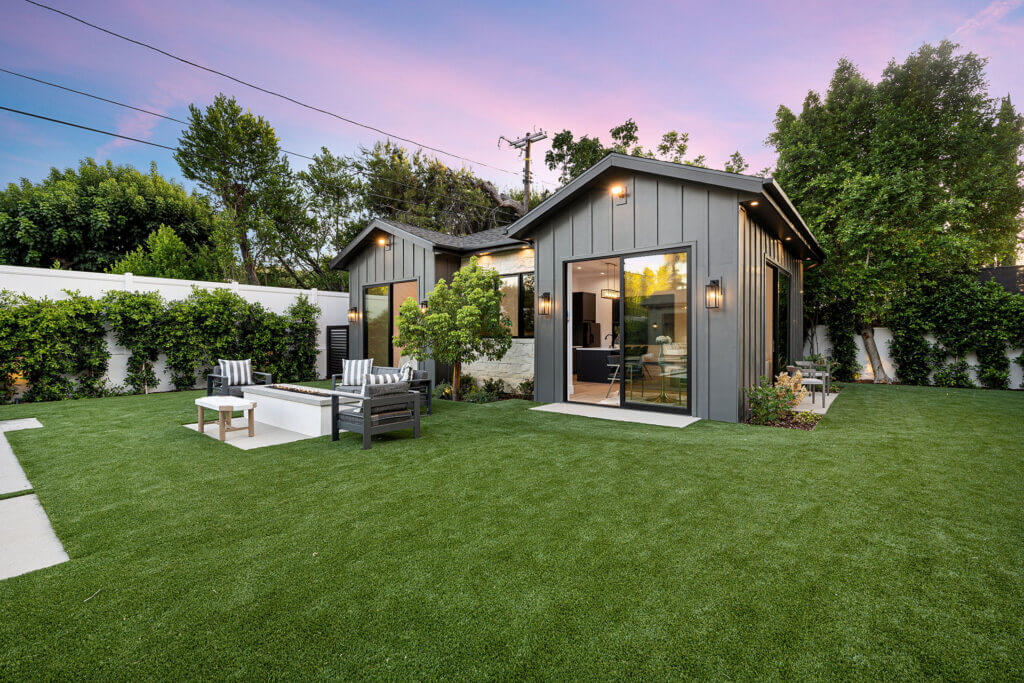
DETACHED BACKYARD ADU
- Separate foundation, separate structure, separate entrance — complete independence from the main home
- Optimal privacy for both main home occupants and ADU residents
- No shared walls — superior acoustic separation and design flexibility
- Own address, own utilities, own HVAC — fully self-contained
- Available in any configuration: studio, 1BR, 2BR depending on lot size and local regulations
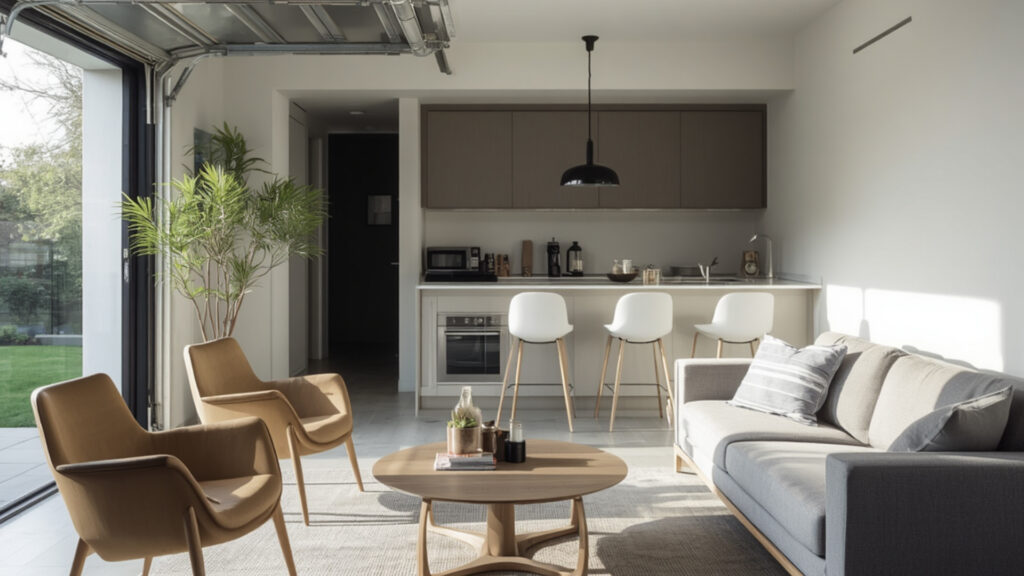
GARAGE CONVERSION ADU
- Existing foundation and shell dramatically reduces construction cost vs. ground-up build
- Insulation, HVAC, electrical, plumbing, and interior finishes added from scratch
- Exterior modified to match the home’s architecture — new windows, doors, and cladding
- Existing garage door opening becomes the new entrance — or converted to window wall
- Permitting is typically more straightforward than a new detached structure
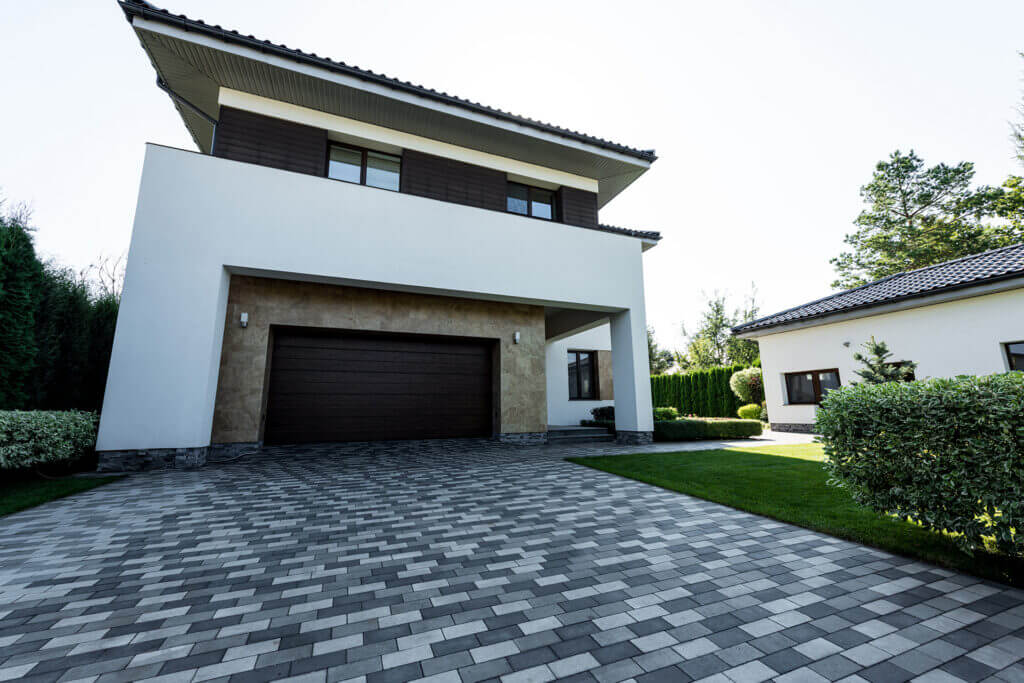
ABOVE-GARAGE ADU
- New second-story structure built over the existing garage slab and framing
- Private exterior staircase with dedicated entrance — fully independent access
- Full kitchen, bathroom, living area, and bedroom on one level
- Structural engineering coordinated in-house to verify and reinforce existing garage structure
- Excellent rental income potential — preferred unit type for young professionals and couples
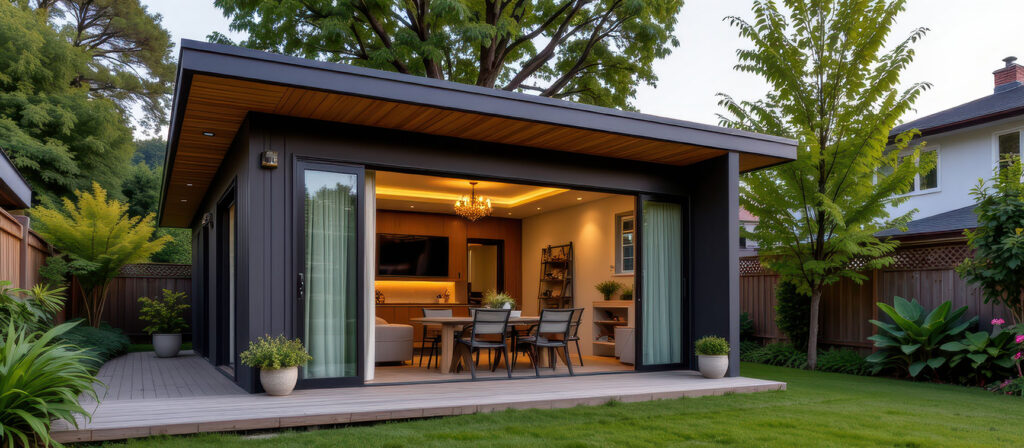
ATTACHED ADU
- Shares one or more walls with the main structure — separate entrance required
- Independent kitchen, bathroom, and living area fully separated from the main home
- Sound insulation between shared walls treated as a design priority, not an afterthought
- Often involves converting an existing portion of the home — garage, basement slab, or ground-floor addition
- Typically less expensive to build than a fully detached structure
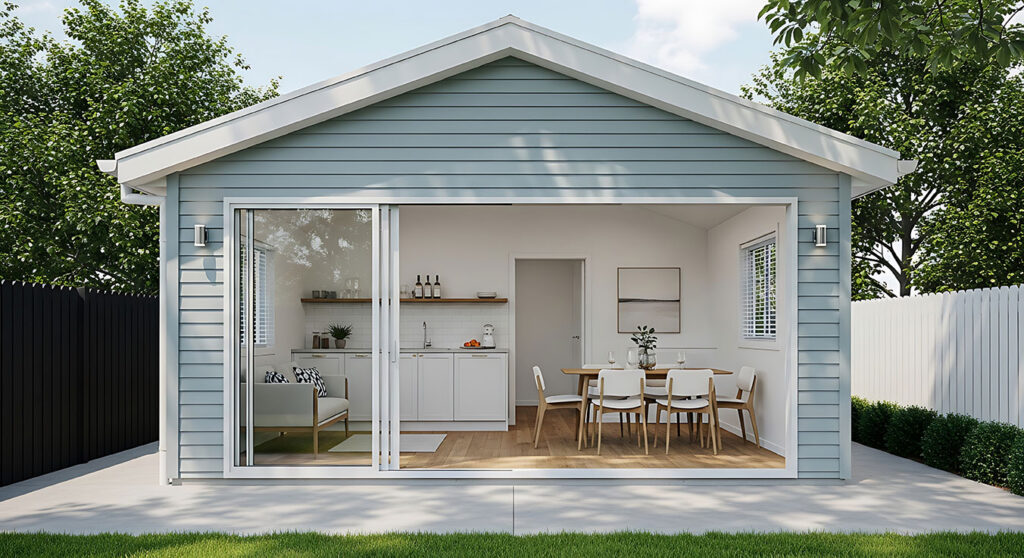
INTERIOR CONVERSION ADU
- Existing structure repurposed rather than new square footage added — most cost-effective option
- Requires a separate entrance — which may need to be added as part of the conversion
- Plumbing, electrical, HVAC, and insulation fully upgraded to dwelling standards
- Egress windows and ceiling height requirements must be met Pro Work assesses during feasibility
- Common in larger single-family homes with oversized garage bays or bonus room configurations
ADU Regulations in Central Florida — What You Need to Know
Florida HB 1339 — Statewide ADU protections
Florida law now limits the ability of municipalities to fully ban ADUs on single-family lots in most cases. This means that even in areas where they were previously restricted, ADUs are now a legal option for many Central Florida homeowners. Pro Work stays up to date with the changing regulations across all counties we serve to ensure your project meets local requirements.
Local ordinances still apply
While the state has opened the door, each county and municipality still sets its own specific rules, including maximum ADU size typically ranging from 750 to 1,200 square feet, setback requirements, height limits, and owner occupancy rules. Orange, Seminole, Volusia, and Lake counties each follow different regulations. Pro Work reviews all applicable local requirements for your specific property before any design work begins.
HOA restrictions — the most common obstacle
Many Central Florida neighborhoods with HOAs have CC&Rs (Covenants, Conditions, and Restrictions) that were written before Florida’s ADU laws and may restrict or prohibit ADUs. HOA rules are private agreements, not government regulations, and Florida ADU laws do not automatically override them. Pro Work reviews your HOA documents during the feasibility phase and advises you on your specific situation before any investment in design.
Setback and lot coverage requirements
Most Central Florida jurisdictions require ADUs to maintain minimum setbacks from property lines, typically five to ten feet on the sides and rear, and also limit the total percentage of a lot that can be covered by structures. Your lot’s size, shape, and existing coverage determine what ADU size is actually buildable. Pro Work evaluates all of these factors during the property visit.
Utility connections and impact fees
A detached ADU requires its own utility connections, including water, sewer, and electrical service. Impact fees, which are one time charges from utilities and municipalities for new connections, can range from $5,000 to $20,000 or more depending on the jurisdiction and unit size. Pro Work identifies all applicable fees during the feasibility phase so they are included in your total project budget from the beginning.
Owner-occupancy requirements
Some Central Florida jurisdictions require the property owner to occupy either the primary home or the ADU, meaning both units cannot always be rented at the same time. This is an important factor for homeowners planning to generate rental income from both spaces simultaneously. Pro Work reviews owner occupancy requirements for your specific property and zoning before any design work begins.
Our ADU Process — Turnkey from Feasibility to Move-In
ADUs are among the most complex projects in residential construction, involving zoning research, engineering, utility coordination, permitting, and a complete build with kitchen and bathroom. Pro Work handles every stage as a fully turnkey process, ensuring your project moves smoothly from planning to final completion.
1. Discovery Call — 15 Minutes
We begin with a brief call to understand your goals, your property, and your investment range. ADUs require specific lot conditions to be viable, so we collect enough information to determine whether your property is a strong candidate before scheduling an on-site visit.
- What type of ADU are you considering?
- Do you have an HOA, and do you know if ADUs are permitted?
- Is your goal rental income, family housing, or workspace?


2. Feasibility Assessment — On-Site
We visit your property and conduct a comprehensive ADU feasibility study, which is the most critical step in any ADU project. We evaluate your lot size and shape, existing coverage, setback requirements, HOA documents, utility access points, and local zoning rules to determine exactly what you can build and at what cost.
- Lot measurement and coverage calculation — how much buildable area you have
- Setback mapping — exactly where on your lot an ADU can be positioned
- HOA document review — whether your CC&Rs permit ADUs
- Utility access assessment — water, sewer, and electrical connection points and associated costs
- Local ordinance review — maximum size, height, owner-occupancy requirements
- Preliminary investment range based on realistic buildable scope
3. Design Phase
With feasibility confirmed, our design team develops a complete ADU design, including floor plans, exterior elevations, interior finishes, and mechanical plans. You will see your ADU in full 3D before construction begins. All architectural drawings are prepared and finalized for permit submission.
- Custom floor plan designed for your intended use — rental, family, or workspace
- Exterior design matched architecturally to your main home
- Interior finish selections — kitchen, bath, flooring, lighting
- 3D exterior and interior walkthroughs before construction begins
- All permits submitted and managed in-house
- Engineering and structural drawings coordinated as required
- Utility connection applications submitted in parallel with building permits
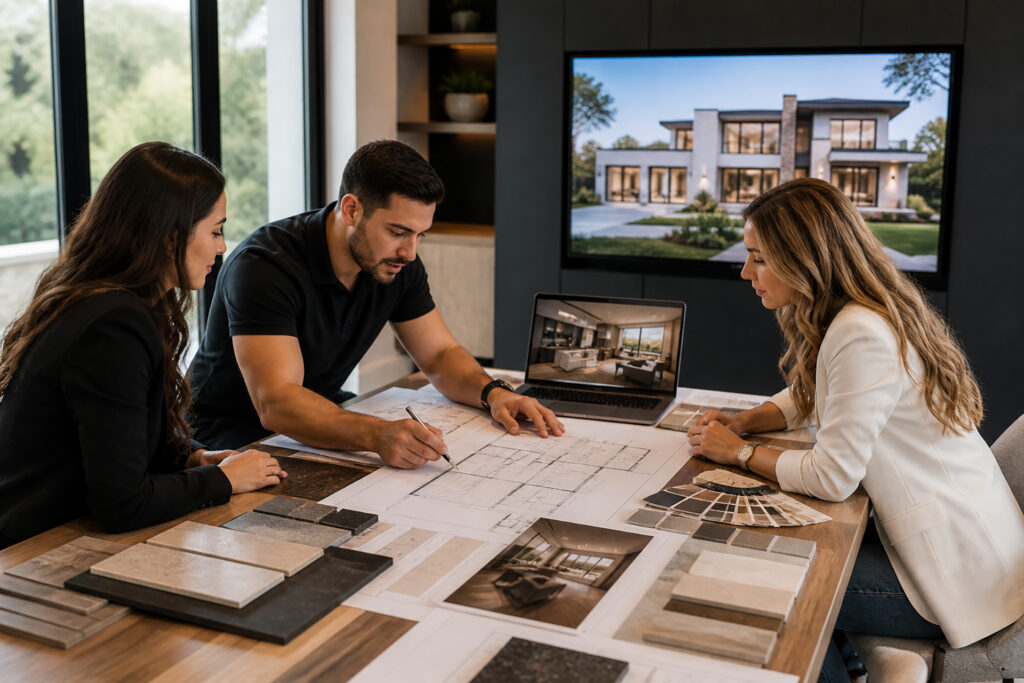
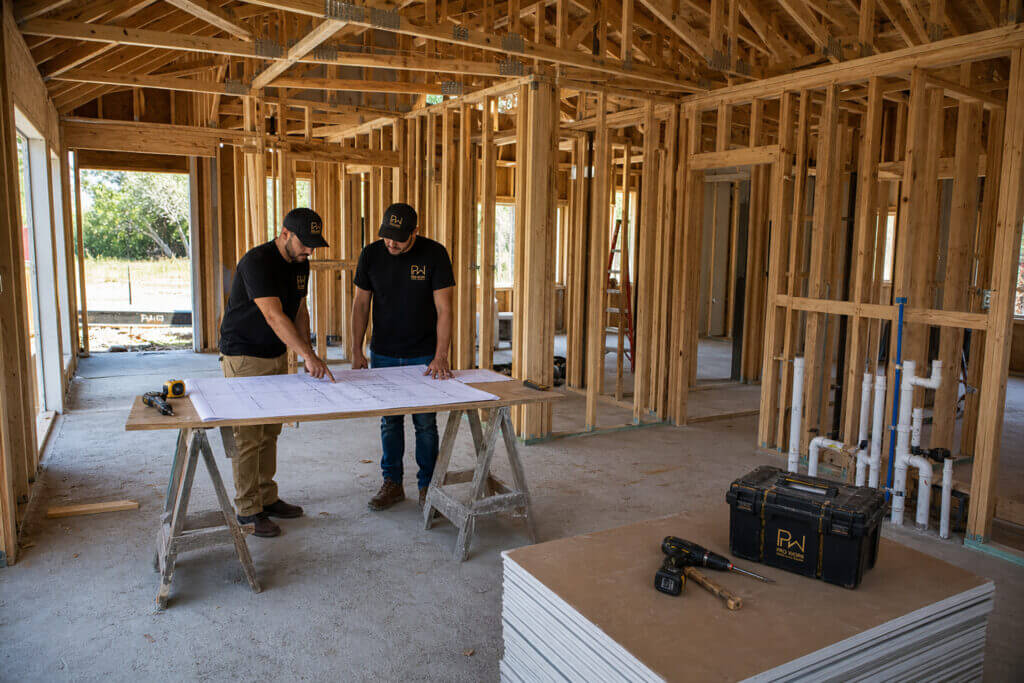
4. Build Phase
Construction begins with site preparation and foundation work, followed by framing, exterior enclosure, mechanical rough-in, insulation, drywall, and finish work. Your dedicated project manager oversees every trade throughout the process, ensuring quality and coordination, while your main home remains fully protected during construction.
- Site preparation, foundation, and framing — built for Florida’s climate and soil conditions
- Exterior enclosure — roofing, siding, windows, and doors matching your main home’s architecture
- Separate utility connections installed — water, sewer, and electrical service to the unit
- Mechanical rough-in — plumbing, electrical, and HVAC designed for an independent dwelling
- Interior finish work — kitchen, bathroom, flooring, lighting, and all finish materials
- All required inspections coordinated and passed at each phase
5. Final Walkthrough, Certificate of Occupancy & Delivery
An ADU is not complete until the Certificate of Occupancy is issued, which is the legal document that allows the unit to be used or rented. Pro Work manages the final inspection process, secures the CO, and delivers a fully operational, code-compliant dwelling ready for occupancy or rental.
- Comprehensive punch list walkthrough — kitchen, bath, every finish detail reviewed together
- Certificate of Occupancy obtained before handover — the legal requirement for occupancy
- All utility connections active and verified — water, power, gas if applicable
- Professional cleaning of the completed unit
- Rental-readiness guidance — what a tenant or family member needs before move-in

ADU Investment — What to Expect
Pro Work prices ADUs on a per-square-foot basis based on finish level, using the same model applied to home additions. This gives you clear and predictable cost control when deciding on size and scope. Impact fees, utility connection costs, and engineering expenses are additional and are identified during the feasibility phase.
BASIC
$275 / sq ft
- Functional finishes throughout
- Standard kitchen & bath fixtures
- Efficient mini-split HVAC
- Code-compliant electrical & plumbing
- Standard windows & doors
- Exterior matched to main home
MID
$325 / sq ft
- Upgraded interior finishes
- Semi-custom kitchen & bath
- Dedicated HVAC zoning
- Enhanced electrical & lighting design
- Higher-quality windows & doors
- Upgraded exterior details
PREMIUM
$375 / sq ft
- Premium custom finishes
- Full custom kitchen & bath design
- Full mechanical design
- Full lighting design package
- High-performance windows & doors
- Full architectural exterior design
EXAMPLE ADU INVESTMENT SCENARIOS
500 sq ft Studio ADU (Basic)
Compact rental unit or home office with full bath and kitchenette
600 sq ft 1BR ADU (Mid)
One-bedroom guest suite or long-term rental unit
800 sq ft 1BR ADU (Mid)
Spacious one-bedroom — strong rental income potential
1,000 sq ft 2BR ADU (Premium)
Two-bedroom unit — maximum rental income or multi-generational living
$137,500
$195,000
$260,000
1,000 sq ft 2BR ADU (Premium)
Why Central Florida Homeowners Choose Pro Work for Their ADU
ADUs fail more often than any other residential project type, not because they are poorly built, but because they are not properly assessed for feasibility before design begins. Homeowners often invest in designs that cannot be permitted or overlook impact fees that exceed their budget. This leads to costly setbacks and delays. Here is how Pro Work takes a different approach:
Feasibility before design — always
Pro Work performs a detailed feasibility assessment before any design work begins. Lot coverage, setbacks, HOA restrictions, utility connection points, and impact fees are all identified upfront, ensuring the design you invest in is one that can be built and permitted without unexpected issues.
Florida regulatory expertise
ADU regulations in Central Florida are complex and continuously evolving. Pro Work works directly with Orange, Seminole, Volusia, and Lake County permitting offices and stays up to date on the changing regulatory landscape, including Florida’s HB 1339 protections and how local ordinances interact with state law.
Turnkey delivery
Pro Work manages every aspect of your ADU project, including design, HOA submissions, permitting, engineering, utility applications, and construction, as one fully managed process. You do not need to coordinate multiple vendors or handle separate contracts.
Certificate of Occupancy as the finish line
A completed ADU is only valuable when it is legally permitted for occupancy. Pro Work manages the Certificate of Occupancy process as a non-negotiable project deliverable, not an afterthought.
Built for the rental market
If rental income is your goal, Pro Work designs your ADU with long-term durability in mind, using finishes that can withstand tenant use, layouts that maximize functionality for renters, and mechanical systems designed to reduce maintenance needs over time.
Frequently Asked Questions — ADUs in Central Florida
Yes, in most cases. Florida’s HB 1339 significantly expanded ADU rights across the state, preventing municipalities from outright banning them on single-family lots in most situations. However, local ordinances still control factors such as size, setbacks, height, and other requirements. HOA CC&Rs, which are private agreements separate from government regulations, may also restrict ADUs in some neighborhoods. Pro Work performs a property-specific feasibility assessment covering all applicable rules before any design investment.
Yes, in some cases your HOA can restrict or even block an ADU. HOA rules, also known as CC&Rs, are private agreements that operate separately from government zoning laws. While Florida law supports ADU development in many areas, it does not automatically override HOA restrictions. Each community sets its own conditions, so approval depends on your specific HOA guidelines. Pro Work reviews HOA documents during feasibility to determine what is allowed before you invest in design or construction.
The ADU cost in Central Florida typically ranges from $120 to $400 per square foot, depending on the size, design complexity, site conditions, and finish level. Garage conversions are usually more affordable, while detached ADUs with full kitchens, bathrooms, and separate utility connections cost more. Most projects fall between $150,000 and $350,000+. Pro Work determines your exact ADU cost in Central Florida during the feasibility phase so you have a clear and accurate budget before design begins.
The timeline to build an ADU in Central Florida usually ranges from 4 to 9 months, depending on the size, design complexity, permitting process, and site conditions. Garage conversions are typically faster, while detached ADUs take longer due to new foundation, utilities, and inspections. The permitting phase can also vary by county. Pro Work manages every stage of the process to keep your ADU construction in Central Florida on schedule from design through final completion.
In most cases, an ADU does not automatically require a separate address, but it must have its own independent utility connections for water, sewer, and electricity. Some jurisdictions may assign a separate address for mailing or emergency identification purposes. Utility requirements also depend on local regulations and site conditions. Pro Work reviews your property’s zoning and infrastructure during the feasibility phase to determine exactly what is required for your ADU.
Whether you can use your ADU as a short-term rental in Central Florida depends on local city and county regulations. Some areas allow short-term rentals with permits or licensing, while others restrict or limit them entirely. HOA rules may also apply and can further control rental use. Pro Work evaluates your zoning and local regulations during the feasibility phase to confirm whether short-term rental use is allowed for your specific ADU project.
A Certificate of Occupancy (CO) is an official approval issued by the local building department that confirms your ADU is safe, fully code-compliant, and legally ready to be used or rented. Without it, the unit cannot be occupied. The CO is issued after final inspections are passed for all major systems, including structure, electrical, plumbing, and mechanical work. Pro Work manages the entire inspection and approval process to ensure your ADU is delivered fully permitted and ready for occupancy.
Yes, financing is available for ADU construction in Central Florida through several common options. Most homeowners use home equity loans or a Home Equity Line of Credit (HELOC), which allow you to borrow against the value of your existing home. Other options include cash-out refinancing, construction loans, and renovation loans depending on your financial situation. In some cases, lenders may also consider the future rental income of the ADU when qualifying you for financing. Pro Work helps you understand your budget and financing requirements during the early feasibility phase.